This is an example page. It’s different from a blog post because it will stay in one place and will show up in your site navigation (in most themes). Most people start with an About page that introduces them to potential site visitors. It might say something like this:
Hi there! I’m a bike messenger by day, aspiring actor by night, and this is my website. I live in Los Angeles, have a great dog named Jack, and I like piña coladas. (And gettin’ caught in the rain.)
…or something like this:
The XYZ Doohickey Company was founded in 1971, and has been providing quality doohickeys to the public ever since. Located in Gotham City, XYZ employs over 2,000 people and does all kinds of awesome things for the Gotham community.
As a new WordPress user, you should go to your dashboard to delete this page and create new pages for your content. Have fun!
 Sustainability Challenges places students in the middle of community-engaged sustainability work – where good intentions quickly meet messy realities. As project teams preparing to work with city partners, players must draft a rapid-response Code of Ethical Conduct for their service-learning projects. They decide how they will collaborate with partners, handle data, manage expectations, and avoid causing harm.
 Serving Our City invites players into the everyday reality of university–society collaboration. Universities promise to serve the public good but interdisciplinary partnerships with cities, communities, and institutions are rarely straightforward. Misaligned timelines, unclear responsibilities, unequal recognition, and invisible labour can quietly undermine even the most well-meaning projects.
 The Big Partnership Prize places players in a high-stakes academic competition. A powerful (fictional) funder is offering a major prize for the most equitable international partnership in higher education. To win, teams must design a joint university course that spans continents, institutions, and unequal infrastructures without reproducing the very hierarchies they claim
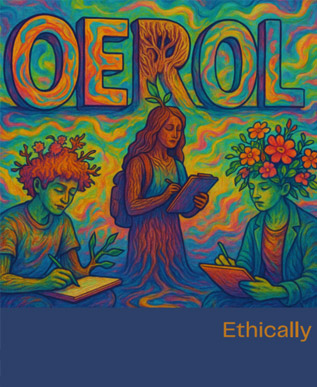 Ethically Oerol drops players into the vibrant, chaotic setting of the Oerol Festival on Terschelling – where art, audiences, artists, tourists, and researchers intersect. Students are tasked with studying performances and installations for the festival, but quickly discover that ethical challenges arise at every stage: preparing for the field, observing artworks, interacting with artists, engaging audiences, and translating lived experiences into published stories. Working in small teams, players design a code of conduct for their research – then confront worst-case scenarios that expose how things can go wrong, from misrepresentation and intrusion to consent failures and unintended harm. The game invites students to think through the full lifecycle of fieldwork under real-world pressures.
 Licence to Connect places players in a fictional – but uncomfortingly familiar – scenario. After a series of student “engagement mishaps,” the city of The Hague introduces a Municipal Engagement Licence. Any university program sending students into the city for fieldwork/research must now prove it can train them to engage ethically, responsibly, and without causing harm.